
You Crushed the Garlic. Now the Clock Is Running.
Jun 21, 2026Article 2 in the garlic series. Article 1 — The 10-Minute Rule — covers why the most powerful thing in garlic doesn’t exist until you crush it, and what happens in those ten minutes before heat. If you’re just starting the series, The 10-Minute Rule on Substack is worth reading first. This piece picks up right where that one ends.
A blind spot hiding in plain sight
Inside garlic cloves lies two separate substances that when combined by a crushing or mincing action creates the famous immune boosting compound, allicin.
Most people think the work is done once the garlic is crushed and the ten minutes have passed.
It isn’t.
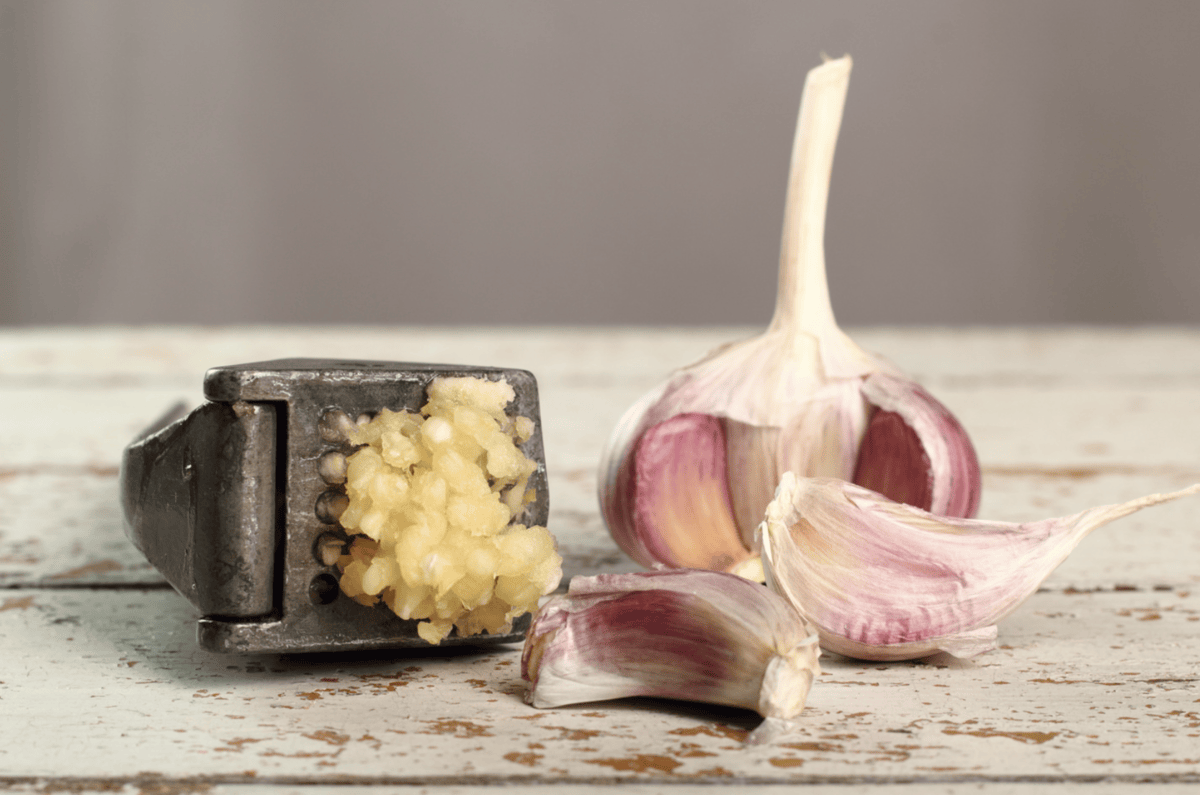
Allicin — the health promoting compound that forms when alliin and alliinase finally meet — is not a stable, patient molecule waiting around for whenever you get to it. It starts breaking down the moment it forms. How quickly depends almost entirely on what you do with it next.
Garlic is everywhere in the wellness world.
Health articles praise it. Cooking shows celebrate it. Recipes call for it by the handful. And somewhere in the back of your mind, you probably carry the vague understanding that garlic is “good for you” — that it does something beyond flavor, something worth having in your kitchen and on your plate.
You’re right. The research is real. A 2020 review published in the NIH’s own database — drawing from human intervention studies, not just lab experiments — documents garlic’s effects on heart health, blood pressure, immune function, blood sugar regulation, and more. This isn’t folk medicine. It’s documented, peer-reviewed, and measurable.
But here is what almost none of those health articles mention. What almost no cooking show explains. What the recipes leave out entirely.
The thing that makes garlic more than seasoning — the compound behind those documented benefits — doesn’t exist in a whole clove. It has to be created. You create it by crushing or mincing the cloves. But it takes 10 minutes for the chemistry to complete — forming allicin, the compound that earns garlic its reputation. And once allicin forms, it holds steady through heat — but the clock is already running.
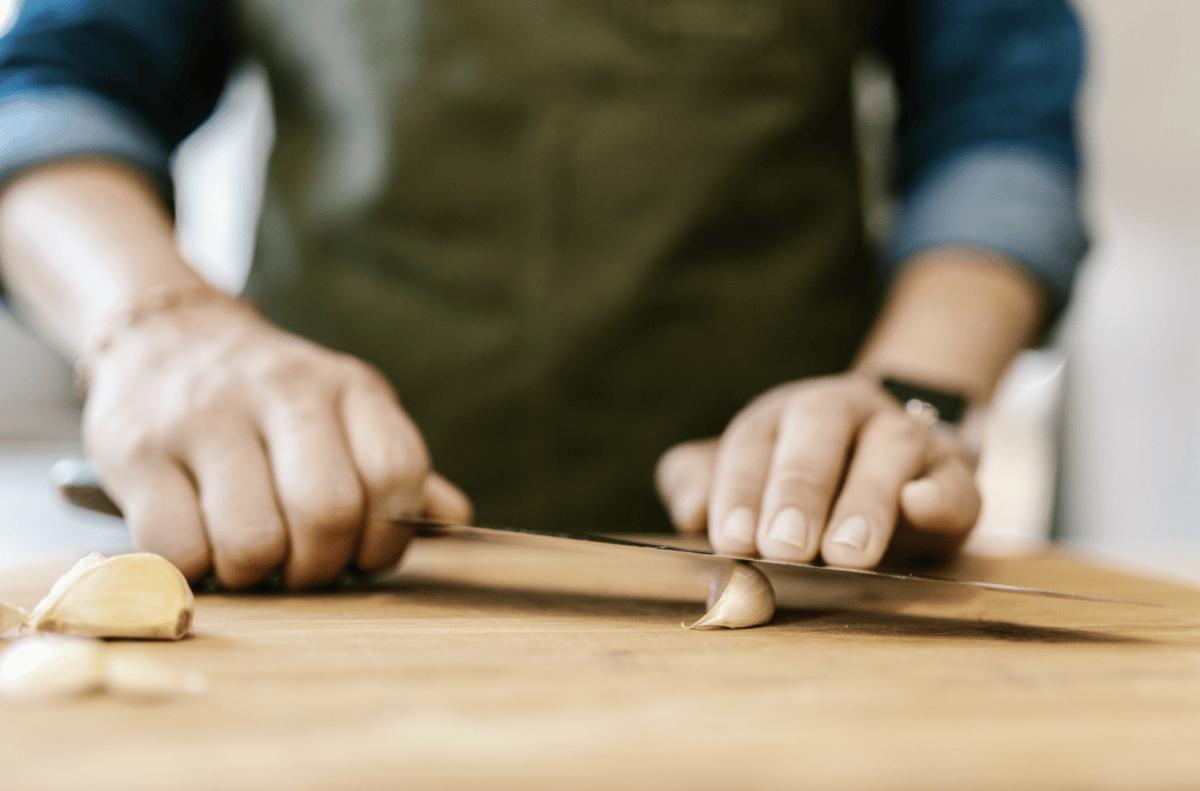
The garlic in most kitchens — jarred and pre-minced, roasted until golden, simmered in olive oil, thrown straight from the freezer into a hot pan — has already lost most of what the research was measuring.
This matters more than most garlic advice acknowledges. You can do everything right in the preparation and still lose most of the health benefits in storage.
Nobody is telling people this. That is the blind spot. Until now.
What Article 1 established — and why it matters here
Pull up a chair. Here’s the quick version of what you need to know coming in.
Inside a whole garlic clove, two substances sit in separate compartments, never touching. Alliin is in one place. Alliinase — the enzyme — is in another. When the cell wall breaks — when you crush, slice, or mince — they finally meet. A reaction starts. And allicin forms.
Worth seeing: what actually happens inside the clove when you crush it.
Allicin is the active agent. It’s the part that earns garlic its reputation.
The 10-minute rule — which Article 1 covers in full — is about giving allicin time to finish forming before heat interrupts the process. Crush first. Wait ten minutes. Then cook. That step unlocks the chemistry.
But here’s what Article 1 didn’t cover.
Once allicin forms, the clock starts ticking. Not in days. Sometimes in hours. What you do with garlic after the crush — what you store it in, where you keep it, how you handle it before it reaches your plate — determines whether any of that chemistry is still working when it gets to your body.
That’s what this piece is about.
The compound that can’t wait
The moment allicin forms, it’s the most active thing on your cutting board. Reactive by nature — always looking for something to interact with. That restlessness is exactly what makes it useful in the body. It doesn’t sit politely. It moves.
But that same restlessness is its limitation. Allicin isn’t designed to linger. It forms, it acts, and then it breaks down into gentler sulfur compounds that carry some benefits of their own. The most potent phase is brief.
The question running through everything that follows is the same one: how long do you have before the most powerful thing in that garlic is gone?
What allicin really is once it forms
Allicin is a thiosulfinate — a reactive sulfur compound. Its reactivity is exactly what makes it biologically useful. It disrupts bacterial enzyme systems, modulates inflammation, and affects cardiovascular function through mechanisms that depend on it being chemically active. That same reactivity makes it naturally unstable. It is not designed to last. It is designed to act fast and then decompose into its downstream compounds — diallyl sulfide, ajoene, and others — which carry their own, more modest benefits.
The question of storage is really a question of how long you have before the most potent health boosting form is gone.
The refrigerator is your friend
Cold slows everything down. Including breakdown.
Research found that allicin in a water-based garlic preparation had a chemical half-life (measure of time for a compound to decay) of approximately one year at refrigerator temperature. One year — which sounds reassuring, until you look at the companion number.
The biological activity — meaning what the allicin is actually doing, the potency you’re after — had a half-life of about 63 days at that same temperature. Still excellent. But a meaningfully different number. The molecule persists chemically while its functional punch is already fading.
For real-world kitchens: freshly crushed garlic stored in a small amount of water, covered, in the refrigerator holds real potency for several weeks. If you’re making a paste, a water extract, or a preparation you plan to use over days, the refrigerator is where it belongs from the moment you make it.
The refrigerator doesn’t stop the clock. It slows it down significantly. That’s the best option most of us have — and it’s genuinely good.
Your kitchen counter is working against you
Room temperature changes everything.
At a typical kitchen temperature, allicin’s biological half-life drops to about six days. The chemical half-life is roughly eleven days. Crushed garlic sitting in a jar on your counter has lost half its active punch within a week. Not because anything went wrong. Just because warmth accelerates the chemistry.
This is the quiet truth behind those large jars of pre-minced garlic on grocery store shelves — sitting at room temperature, processed weeks before you bought them. By the time that garlic was minced, jarred, shipped, shelved, and carried home, most of the allicin activity is already spent. The flavor is there. The thing that makes garlic more than seasoning largely isn’t.
If you use jarred garlic for convenience, that’s a reasonable choice and there’s no judgment in it. Just know what you’re getting — and what you might want to add fresh on the side if the health piece matters to you.
Oil does something surprising — and not in a good way
This one genuinely stopped me when I first read it. I went back and checked the study twice.
Allicin in vegetable oil has a biological half-life of about 0.8 hours. Chemical half-life: about 3.1 hours. Not days. Hours.
Something in the lipid (oil) environment — researchers think it’s the interaction between allicin and the unsaturated fatty acids (fats that remain in liquid from at room temperature) in the oil — accelerates breakdown dramatically. Your homemade garlic-infused olive oil is beautiful. It smells like Sunday dinner. But as a way of holding onto the thing that makes garlic more than seasoning? It’s essentially spent within a few hours of being made.
There is also a separate and serious safety point here: garlic stored in oil at room temperature creates conditions that can support botulism growth. That risk has nothing to do with allicin and everything to do with the anaerobic environment oil creates. Keep any garlic-oil preparation refrigerated and use it within a few days.
The oil carries the flavor beautifully. But, for the health chemistry, it’s the wrong medium (substance like water vs oil).
Alcohol: the old herbalists knew something
If you’ve ever wondered why traditional medicine reached for alcohol-based tinctures rather than oil or water infusions, here’s part of the answer. Research found allicin was more stable in a 20% alcohol solution than in water alone.
The exact half-life numbers at that concentration weren’t isolated, but the direction is clear. Alcohol slows the breakdown in a way water doesn’t. If you’re making a garlic tincture for medicinal use, an alcohol base gives allicin a longer useful life. The old herbalists were working from observation and tradition. The chemistry confirms they were onto something.
Garlic paste: the underrated one
Here’s something the research found that I didn’t expect.
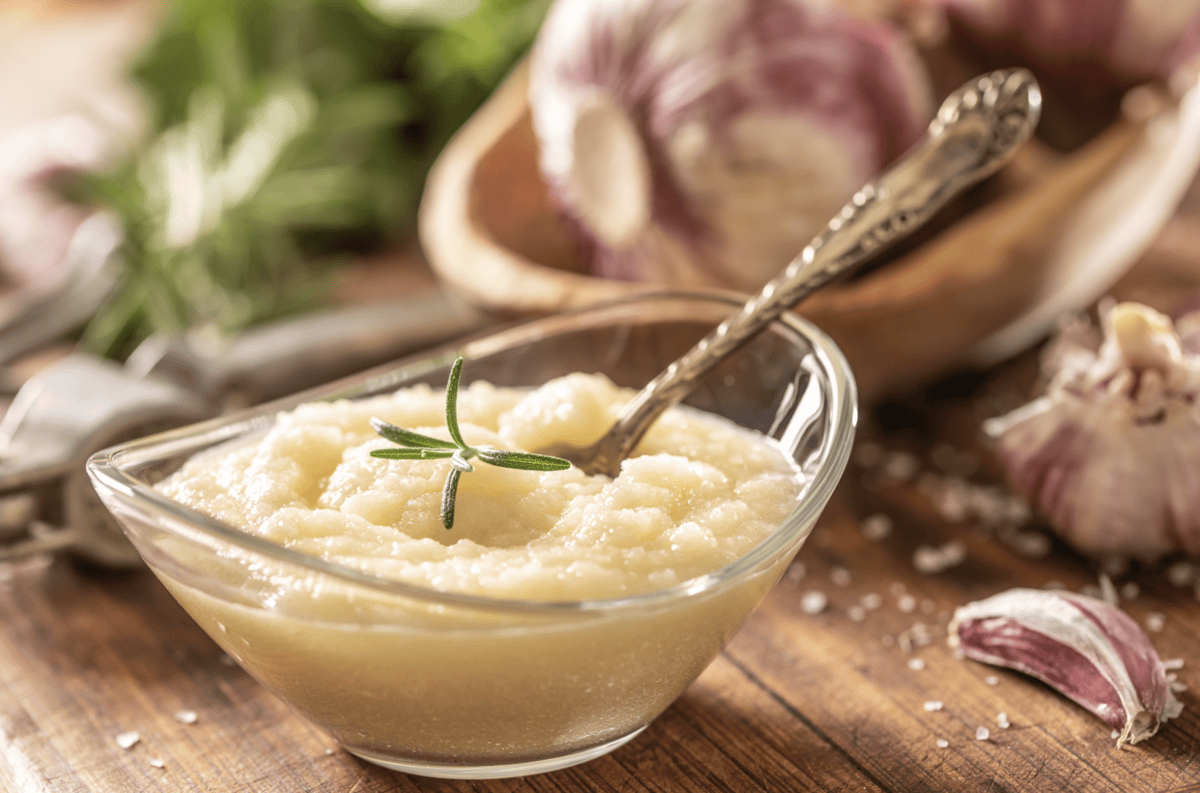
Raw garlic processed into paste and stored sealed — blended, refrigerated, kept airtight — lost less than 9.5% of its allicin during preparation and reached a maximum loss of only 22% over 180 days of storage. Six months. For a compound that dies in hours in oil, that’s a striking contrast.
The same study looked at fried garlic. Allicin loss: 99%. Not over time. Right at the moment of frying.
Blend your garlic raw, seal it, and refrigerate or freeze it. You’ve done the 10-minute step in advance. The chemistry is preserved and ready whenever you need it, for months.
What about frozen cloves?
A reader asked me this directly, and I’ve heard it from others too. She buys organic peeled garlic in bulk and puts the bag straight in the freezer. Pulls out a few cloves when she needs them. Simple. Convenient. No waste.
“Did I freeze all the benefits right out of them?”
Good news first: no.
Here is the distinction that matters most. Cold suspends the reaction. Heat ends it. Those are completely different things.
Freezing a whole clove puts alliin and alliinase into a kind of suspended state — intact, still separated inside the cellular structure, still capable of doing exactly what they’re designed to do. When you take that clove out and crush it, the reaction starts up right where it would have started with a fresh clove. Research estimates frozen whole cloves produce about 88% of the allicin fresh garlic does. A modest, acceptable loss for always having ready garlic on hand.
The 10-minute rule still applies, though. Taking frozen cloves straight to a hot pan skips the window the enzyme needs. Crush or mince first. Let them rest at room temperature for ten minutes. Then cook. The garlic was frozen — that step hasn’t changed.
One real watch-out: don’t keep opening the same bag. A 2021 study found that repeated freeze-thaw cycles — not the freezing itself — were the main culprit in enzyme degradation. Every time you open the bag, pull a few cloves, and reseal it, the chemistry in the remaining cloves takes a small hit. Over weeks, that adds up.
The fix is simple and takes two minutes the day you bring the garlic home. Portion the cloves into small airtight freezer bags — enough for one or two uses each — before they ever go in the cold. Then you open a fresh sealed portion every time, and everything else stays undisturbed.
Peeled or unpeeled? Unpeeled cloves have a slight structural advantage — the papery skin buffers some ice crystal formation. Properly sealed peeled cloves work fine. The portioning matters more than the skin.
Why daily garlic makes sense — the chemistry explains it
At 37°C/98.6°F — human body temperature — allicin has a half-life of approximately one day. Its antibacterial activity at that temperature persists for roughly 1.2 to 1.9 days.
The allicin you eat today is largely spent by tomorrow.
This is why the research on garlic’s health benefits consistently points to regular, sustained intake rather than loading up once in a while. The downstream compounds continue working after the allicin itself is gone. But the sharpest edge of the chemistry is brief. Daily garlic isn’t habit for habit’s sake. It’s what the chemistry is built for.
Daily use is not just a wellness recommendation. It is what the chemistry actually supports.
What to take away from all of this
Most of the garlic advice out there — in recipes, in health articles, in cooking shows — tells you garlic is good for you. It doesn’t tell you that the thing making it good for you has to be created, has a narrow window to do its work, and is easily lost without ever knowing it.
Now you know.
Refrigerate it when you’re making something to use over several days. Skip the counter and the oil if the health benefit matters to you as much as the flavor. Freeze in small portions, not in one bag you open and reseal repeatedly. And wherever your garlic started — fresh, frozen, or paste — crush it, give it ten minutes, then let the heat do its separate work.
The chemistry isn’t fragile if you know how to handle it. Allicin forms in the cold and the crush. It survives in the cold and the dark. It dies fast in heat, in oil, and in time.
Work with those conditions and the garlic works with you.
Knowledge is Power
With care, Patti
Health keeping is a practice, not a performance
Sources & Further Reading
1. Fujisawa, H. et al. — “Thermostability of Allicin Determined by Chemical and Biological Assays.” Bioscience, Biotechnology, and Biochemistry, Vol. 72(11), 2008.
2. Fujisawa, H. et al. — “Biological and Chemical Stability of Garlic-Derived Allicin.” Journal of Agricultural and Food Chemistry, Vol. 56(11), 2008. PubMed ID: 18489116.
3. Suciu, A. et al. — “Evaluation of Allicin Stability in Lyophilized Aqueous Garlic Extract for New Pharmaceutical Solid Formulations with Bioavailable Allicin.” Journal of EcoAgriTourism, Vol. 12(2), 2016.
4. Evaluation of Allicin Stability in Processed Garlic of Different Cultivars. SBCTA / Brazilian Journal of Food Technology, 2014.
Bryndal, I. et al. — “Effect of Physicochemical Parameters on the Stability and Activity of Garlic Alliinase.” PLOS ONE, 2021. pmc.ncbi.nlm.nih.gov/articles/PMC7978267/
Linus Pauling Institute, Oregon State University — “Garlic.” Micronutrient Information Center, updated 2016. lpi.oregonstate.edu/mic/food-beverages/garlic
Stay connected with news and updates!
Join our mailing list to receive the latest news and updates from our team.
Don't worry, your information will not be shared.
We hate SPAM. We will never sell your information, for any reason.